

زمان مطالعه : 5 دقیقه
Navigating %key1% Feels Surprisingly Intuitive from the First Click
انتشار : 1405-03-23
آخرین بروزرسانی : 1405-03-23
Why %key1% Interfaces Feel So Familiar Instantly
There’s something surprisingly approachable about %key1% from the moment you engage with it. Unlike many digital environments that demand a steep learning curve, %key1% often greets users with a sense of familiarity and comfort. This intuitive quality doesn’t happen by accident; it’s rooted in thoughtful design and an understanding of user behavior that dates back to some of the most influential interfaces in tech history.
From popular platforms shaped by companies like Google and Microsoft to apps developed by innovators such as Adobe and Spotify, the standards for usability have steadily aligned with how people naturally think and act online. This means navigating %key1% rarely feels like solving a puzzle. Instead, it often feels like picking up a book you’ve read before, even if it’s your very first time.
To get a hands-on sense of this intuitive flow, visiting hubs like https://google.com/ can offer a glimpse of how streamlined user experiences play out. These platforms emphasize simplicity and clarity, setting an example that many %key1% designs follow today.
The Role of Familiar Patterns in Enhancing User Confidence
When it comes to digital interfaces, patterns matter. Icons shaped like magnifying glasses for search, three-line “hamburger” menus for navigation, or cards that organize content visually — these are all cues that help users feel grounded. %key1% consistently incorporates such recognizable elements, tapping into a collective knowledge that spans various applications.
Because of this, even users who might be tech-shy can quickly build confidence. They know where to look for features or how to perform basic tasks without second-guessing every click. This instinctive behavior reduces frustration and often leads to more engagement.
Common Pitfalls and How to Avoid Them While Using %key1%
Despite its intuitive nature, %key1% isn’t immune to occasional hiccups. One common mistake is overloading screens with too much information, which can cloud the clarity that users expect. Designers sometimes forget that less is more, especially when the goal is effortless navigation.
Another trap is inconsistent labeling or unexpected terminology. Users might come across buttons or menus labeled in ways that contradict common conventions, leading to confusion. For example, a “dashboard” might be called a “control center” without clear explanation, leaving users wondering if it’s the same thing.
For those engaging with %key1%, here are a few practical tips to keep the experience smooth:
- Look for universal icons and familiar layouts as guides.
- Don’t hesitate to use search features or help menus when something isn’t immediately clear.
- Take your time with initial settings or tutorials to avoid future frustrations.
- Keep your interface updated, as many providers fine-tune usability based on user feedback.
- Report inconsistencies or confusing elements to support forums if available.
How Technology and Providers Influence the %key1% Experience
The underlying technology supporting %key1% plays a significant role in shaping its intuitiveness. Modern frameworks like React, Angular, or Vue.js allow developers to create dynamic and responsive interfaces that react instantly to user input. This means less waiting and more fluid interaction.
Moreover, the involvement of trusted providers with established reputations ensures a degree of polish and reliability. Brands like Apple, Amazon, and Samsung often set the bar by emphasizing security and seamless integration with other devices or services. Their approaches trickle down, influencing smaller projects and startups working with %key1% environments.
Balancing Innovation and Familiarity: What Users Expect from %key1%
How much innovation is too much when it comes to %key1%? This question often emerges in user communities and design circles. While fresh ideas can enhance engagement, they risk alienating users who come seeking familiarity. Striking the right balance is a delicate art.
From my perspective, the key lies in incremental changes that build on existing knowledge. For example, adding new features or shortcuts without completely changing core navigation can delight users without overwhelming them. Observing popular apps with millions of users, such as Netflix or Slack, we see how subtle refinements keep interfaces both fresh and accessible.
This is especially true given how many people rely on mobile devices with limited screen real estate. %key1% experiences optimized for touch, gestures, and quick access are more likely to succeed than those that demand unfamiliar or complex interactions.
What to Keep in Mind When Diving Into %key1%
Whether you’re a seasoned pro or just starting out, remember that your first encounter with %key1% can set the tone for all future interactions. Patience goes a long way, as does an open mind toward exploring menus and settings.
Also, consider the importance of responsible use, especially if %key1% involves financial or personal information. Protecting your privacy and managing risks should be part of everyday practice, no matter how intuitive the interface feels.
In the end, %key1% offers a chance to experience digital environments that feel less like obstacles and more like natural extensions of our daily routines. And isn’t that what great design is all about?
محصولات
-
 تونر تی تیری فارماسی
388,000 تومان
تونر تی تیری فارماسی
388,000 تومان
-
 میسلار واتر گارنیر پوست حساس
467,000 تومان
میسلار واتر گارنیر پوست حساس
467,000 تومان
-
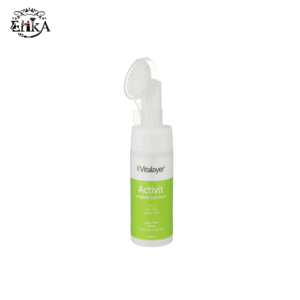 فوم شست و شو ویتالیر مناسب پوست چرب
438,800 تومان
فوم شست و شو ویتالیر مناسب پوست چرب
438,800 تومان
-
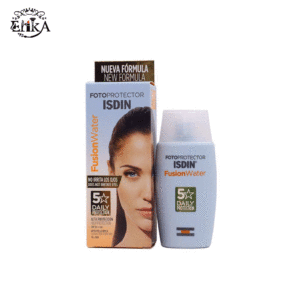 ضد آفتاب فیوژن واتر ایزدین
قیمت اصلی: 1,568,000 تومان بود.1,500,000 تومانقیمت فعلی: 1,500,000 تومان.
ضد آفتاب فیوژن واتر ایزدین
قیمت اصلی: 1,568,000 تومان بود.1,500,000 تومانقیمت فعلی: 1,500,000 تومان.
-
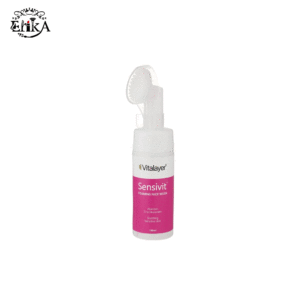 فوم شستشو ویتالیر پوست حساس
423,100 تومان
فوم شستشو ویتالیر پوست حساس
423,100 تومان
دیدگاه ها